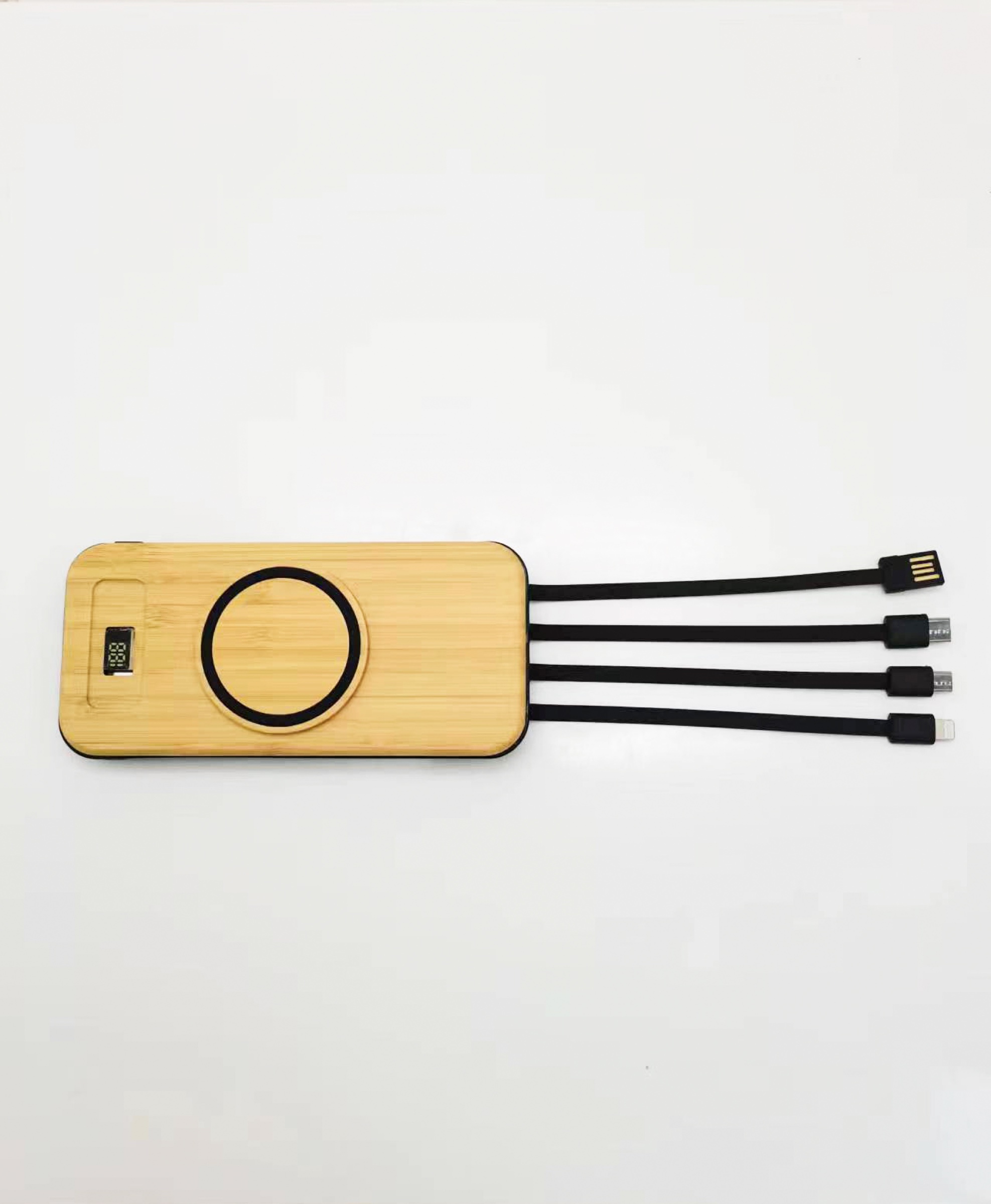
Bamboo charging products combine a natural outer material with conventional charging electronics. The exact construction varies by model, but a controlled process is essential because bamboo responds to moisture, heat, and machining differently from molded plastic.
1. Select and stabilize the bamboo
Production starts with bamboo chosen for consistent grain and usable dimensions. The material is dried to control moisture before precision work begins. Some structures use laminated bamboo sections where the design needs more stability or a larger solid part. Buyers should confirm the intended bamboo construction, visible grain direction, color tolerance, and any sourcing documents required for their market.
2. Shape each part with CNC machining
The prepared bamboo is cut and CNC-machined to create the housing, cable openings, charging-coil position, button holes, and internal spaces for the circuit board or battery. Tooling and tolerances matter: the electronics must fit securely, while the outer edges need enough material to resist normal handling. A prototype or engineering sample is normally used to check fit before mass production.
3. Sand, clean, and protect the surface
Machined parts are sanded to remove sharp edges and machining marks. Dust is removed before the approved surface treatment is applied. A suitable finish helps reduce moisture absorption and everyday staining while preserving the natural grain. Bamboo electronics should still be treated as dry-use products unless the exact model has a documented water-resistance rating.
4. Assemble the charging electronics
The charging coil, control board, ports, indicator, battery, and protection components are assembled according to the product design. Bamboo is the housing material; charging speed, compatibility, and battery safety depend on the electronics inside. For wireless models, coil position and thermal behavior must be checked with the intended adapter and supported devices.
5. Test function and appearance
Finished units should be checked for charging output, port function, indicator behavior, abnormal heat, surface finish, fit, and visible defects. Battery products also require the transport and market documentation applicable to the model and destination. Common buyer requests can include CE, FCC, RoHS, MSDS, and UN38.3 documents, but applicability must be confirmed for the exact product.
6. Approve branding and packaging
Logo position, engraving depth, print color, packaging language, accessories, labels, and carton marks should be approved on a physical sample. Natural grain and color vary, so a buyer should define an acceptable appearance range rather than expect every bamboo surface to be identical.
Browse the current bamboo product range or send Edsonsoon a project brief with the model, quantity, market, branding method, and required documents.